Project overview
The product
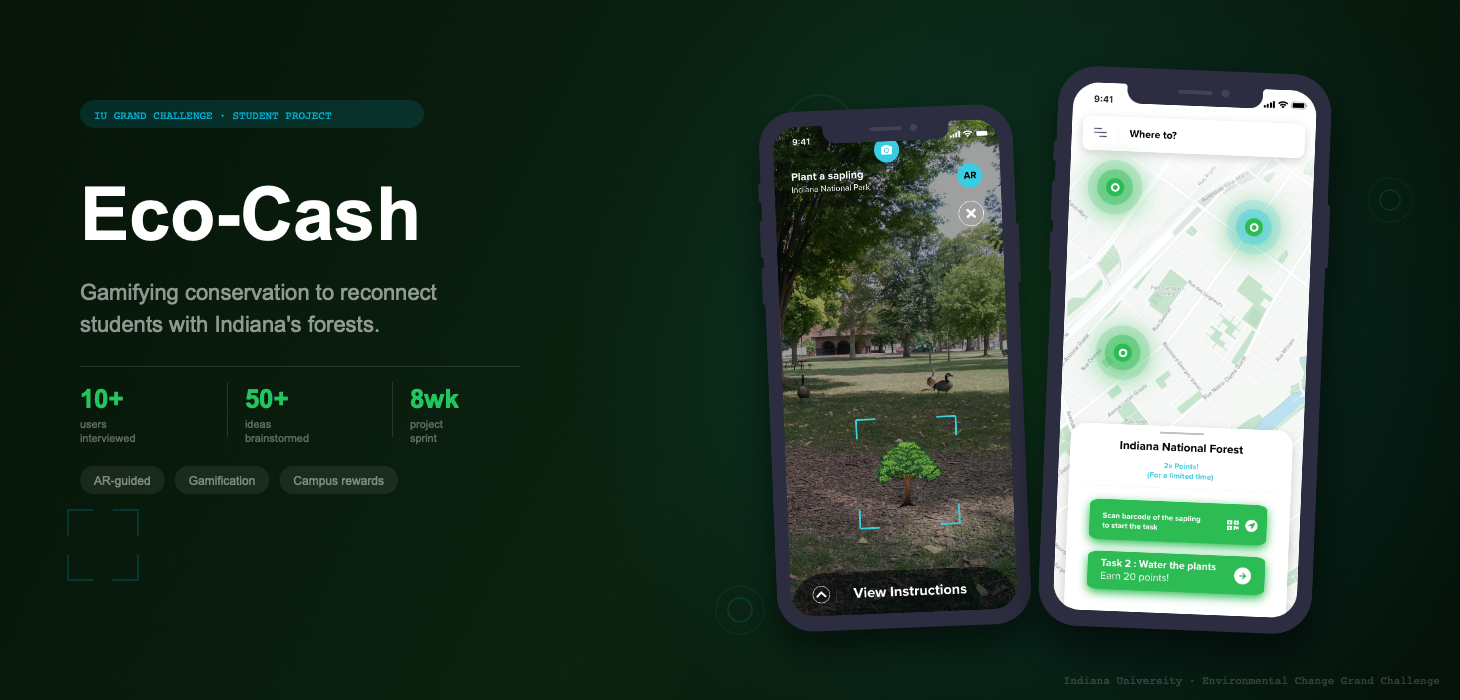
Eco-Cash is a mobile application that uses gamification and AR to encourage students to engage with Indiana's forests. Users visit forest areas, complete conservation tasks from planting saplings to photographing biodiversity, and earn points redeemable at campus vendors like Starbucks via their Crimson Card.
The mandate
Indiana University's Grand Challenge on Environmental Change asked students to address deforestation at a scale where technology could offer a practical solution. The goal was to narrow a planetary-scale problem to a specific, actionable intervention that students could own.
Design a collaborative mobile application that raises public consciousness about deforestation by making forest visits social, rewarding, and habit-forming for Indiana students.
My role
As a core team member on Eco-Cash, I led user research, owned the visual design, and ran usability testing and prototyping from low-fidelity sketches through to the final hi-fi screens.
This was an 8-week sprint under real-world constraints: no direct access to forest rangers, limited budget, and the need to ground every design decision in evidence gathered through field research and expert interviews.
People care about climate but don't know how they can help
"The exploitation of the wilderness has led to various domino effects: global warming, soil erosion, loss in biodiversity. Indiana's forests are continuously going through simultaneous changes, with rising temperatures impacting everything from air quality to agriculture."
400% logging increase
Logging on Indiana state forests increased at least 400% since 2002, dramatically reducing old-growth canopy and wildlife habitat.
Wildlife set-asides collapsed
Before 2005, 40% of Indiana state forests were maintained for wildlife. By 2018, that figure had fallen to just 3%.
Conservation funding dried up
The Benjamin Harrison Conservation Trust has seen its primary revenue decline by more than 50% over the last 20 years.
Only 4% of land protected
According to HEC, only 4% of Indiana's land area is protected for ecological value or outdoor recreation, one of the lowest rates in the region.
Three methods to size the problem and see the forests firsthand
We used three complementary methods: secondary research to establish the scale of the problem, competitive analysis to understand the market, and field research to see Indiana's forests firsthand.
Secondary research
Reviewed forestry data, environmental reports, and Indiana state records to quantify the deforestation problem and establish a factual baseline.
Competitive analysis
Mapped existing solutions, apps like EcoTour and conservation platforms, to identify gaps and opportunities for a gamified, location-based approach.
Field research
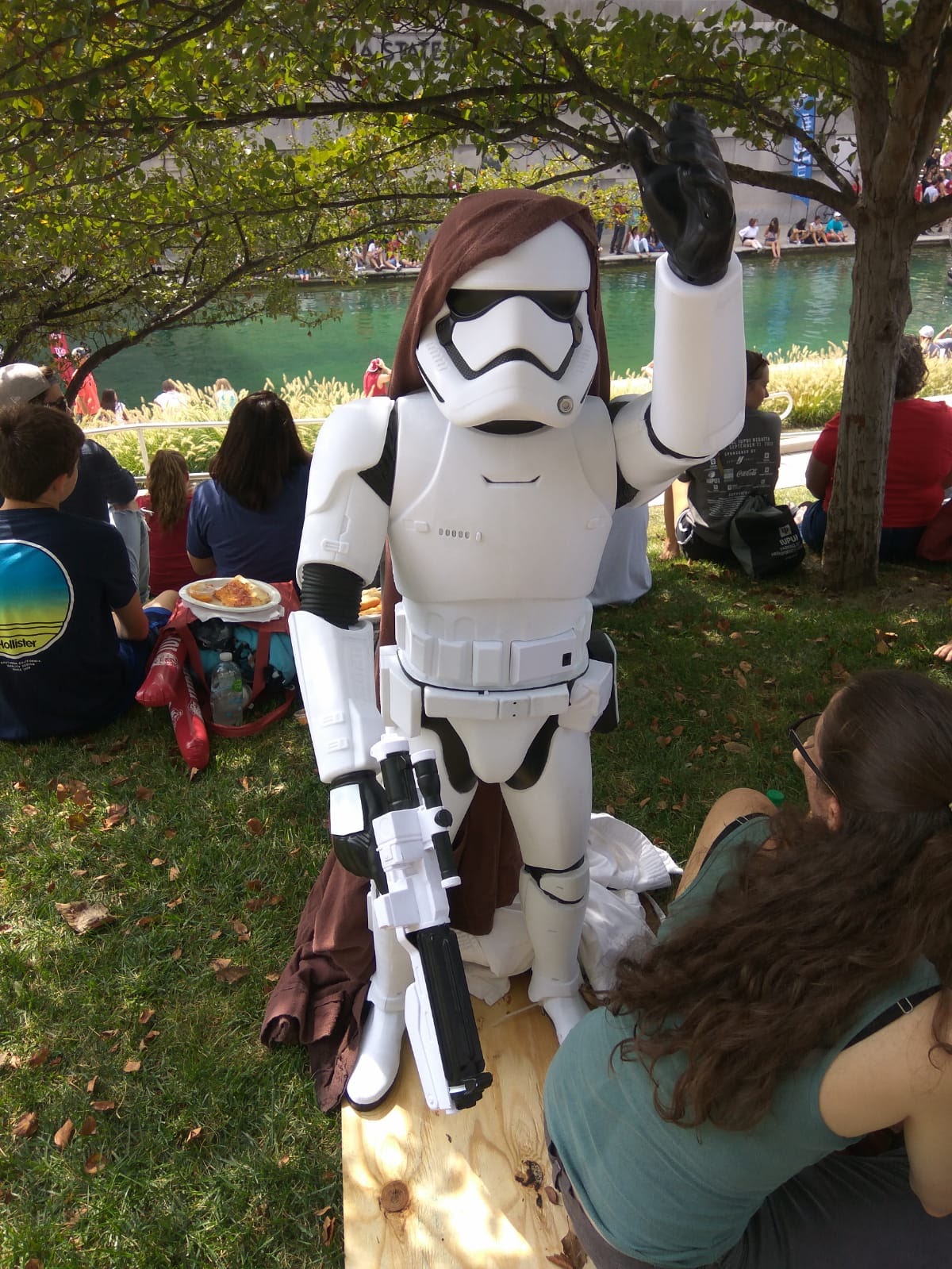
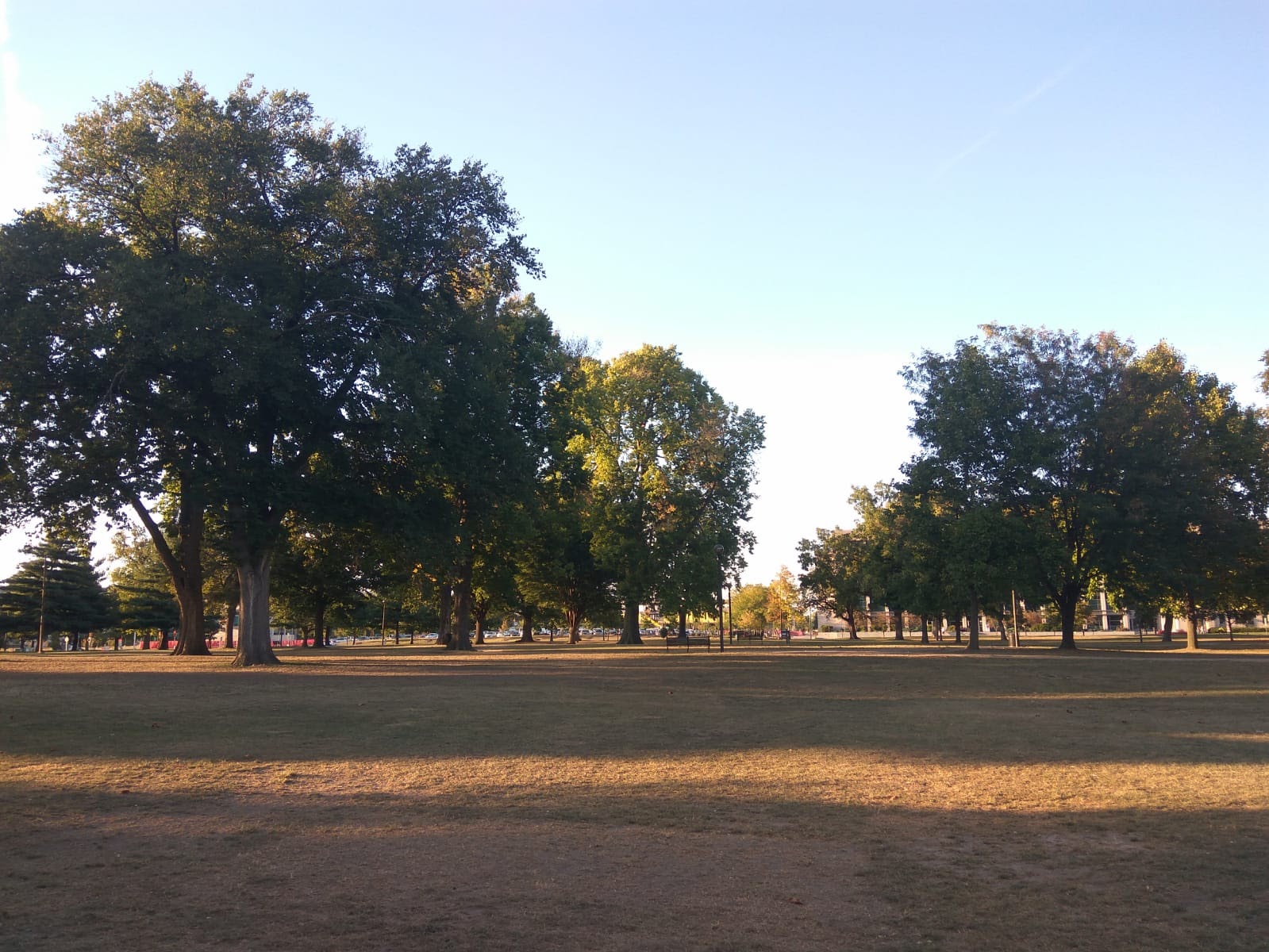
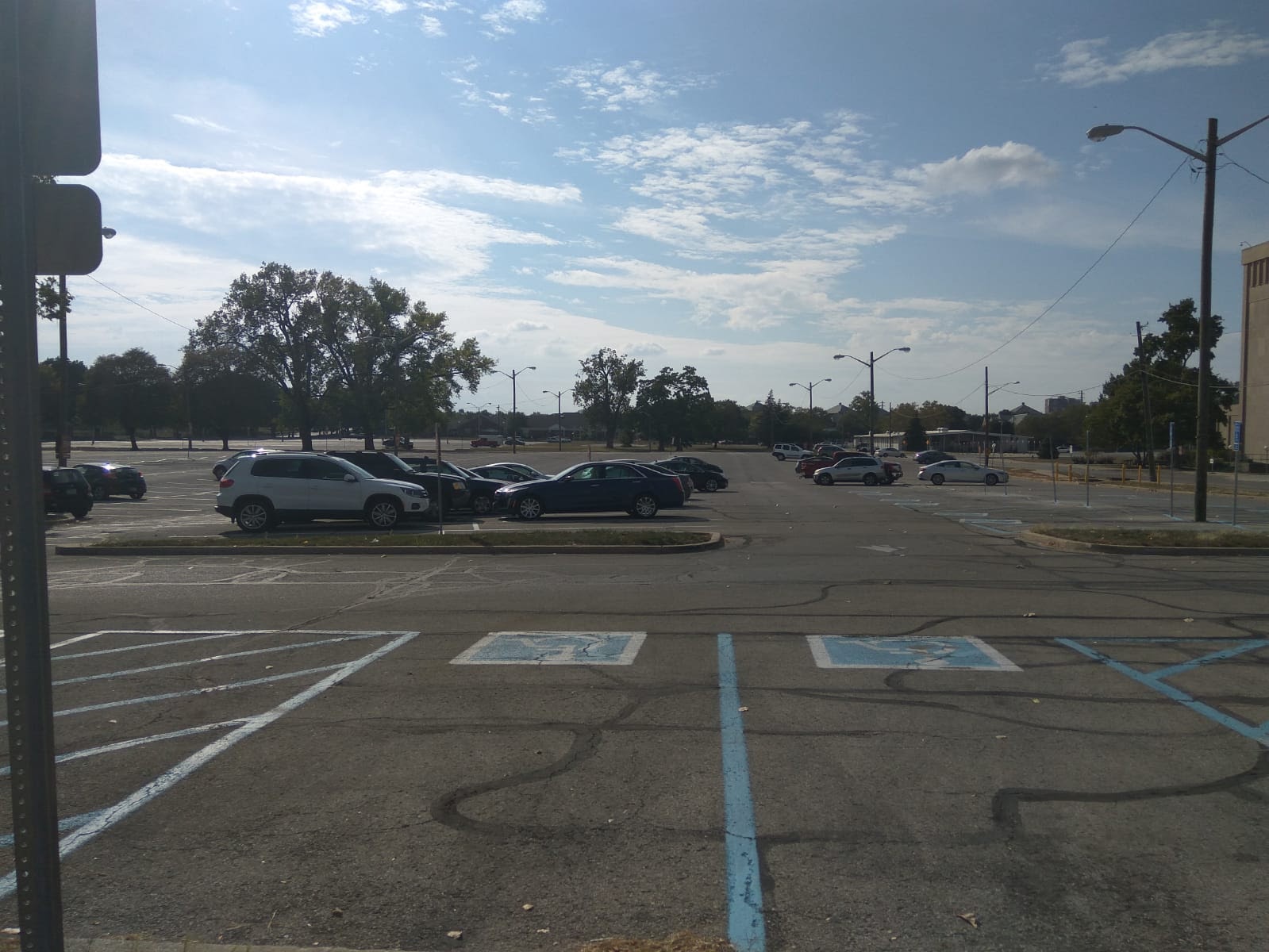
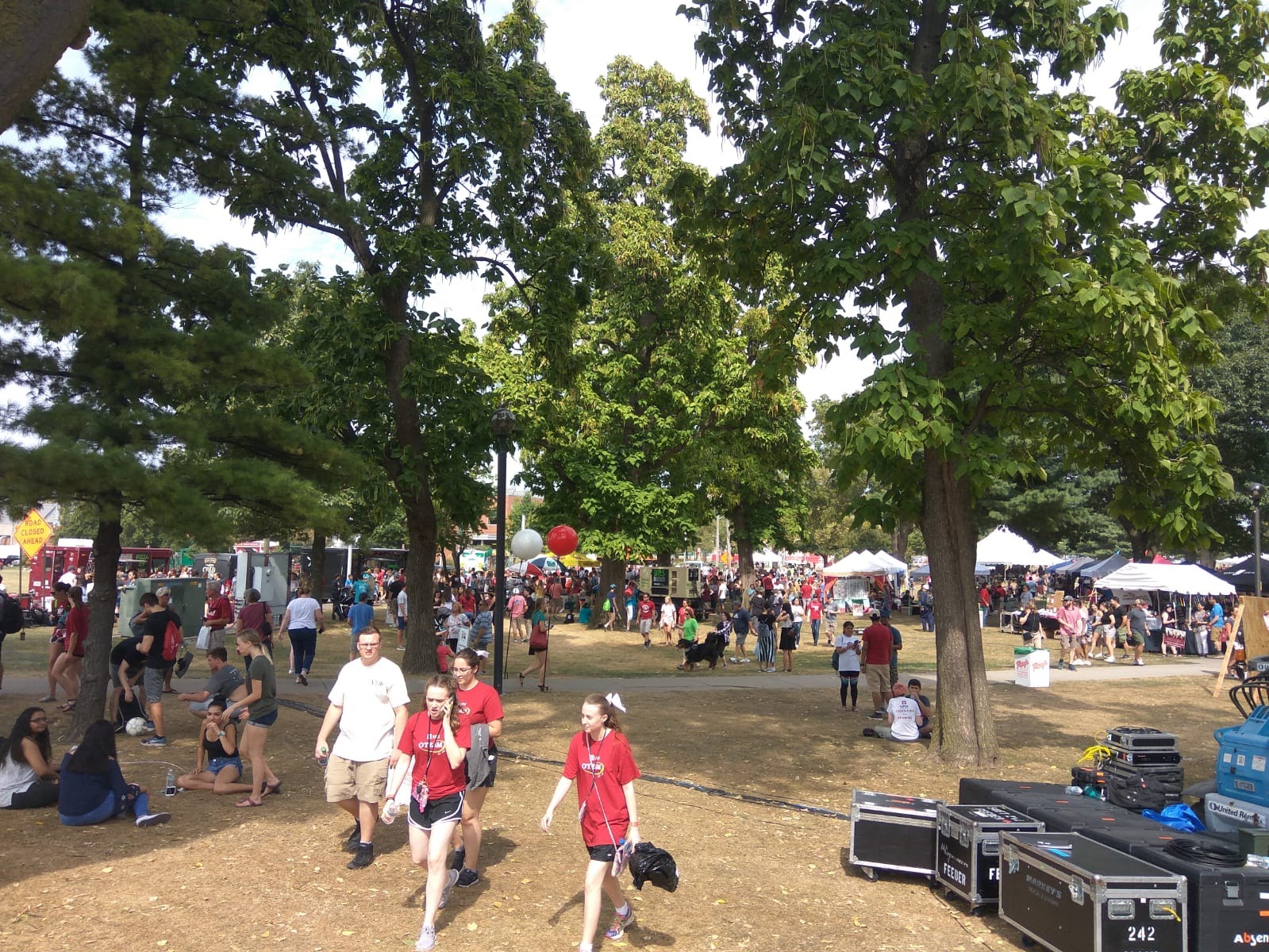
Visited Military Park, Canal Walk, and surrounding sites. Lab testing can't replicate what you observe when you go there yourself.
Field research: what we saw
User interviews
We interviewed officials from the Indiana Forest Alliance, protecting forests for 25+ years, plus 10 millennial participants, combining expert knowledge with real end-user perspectives.
"Forests are being lost to development. Once changed into another land-use, they are rarely allowed to revert back. Habitats are usually permanently lost."
"Earlier in my days, there were many farm fields across Speedway. My uncle had a farm field. All of it is now developed and converted into urban areas."
"I believe technology could be the answer to all this."
What the research kept saying
Affinity mapping
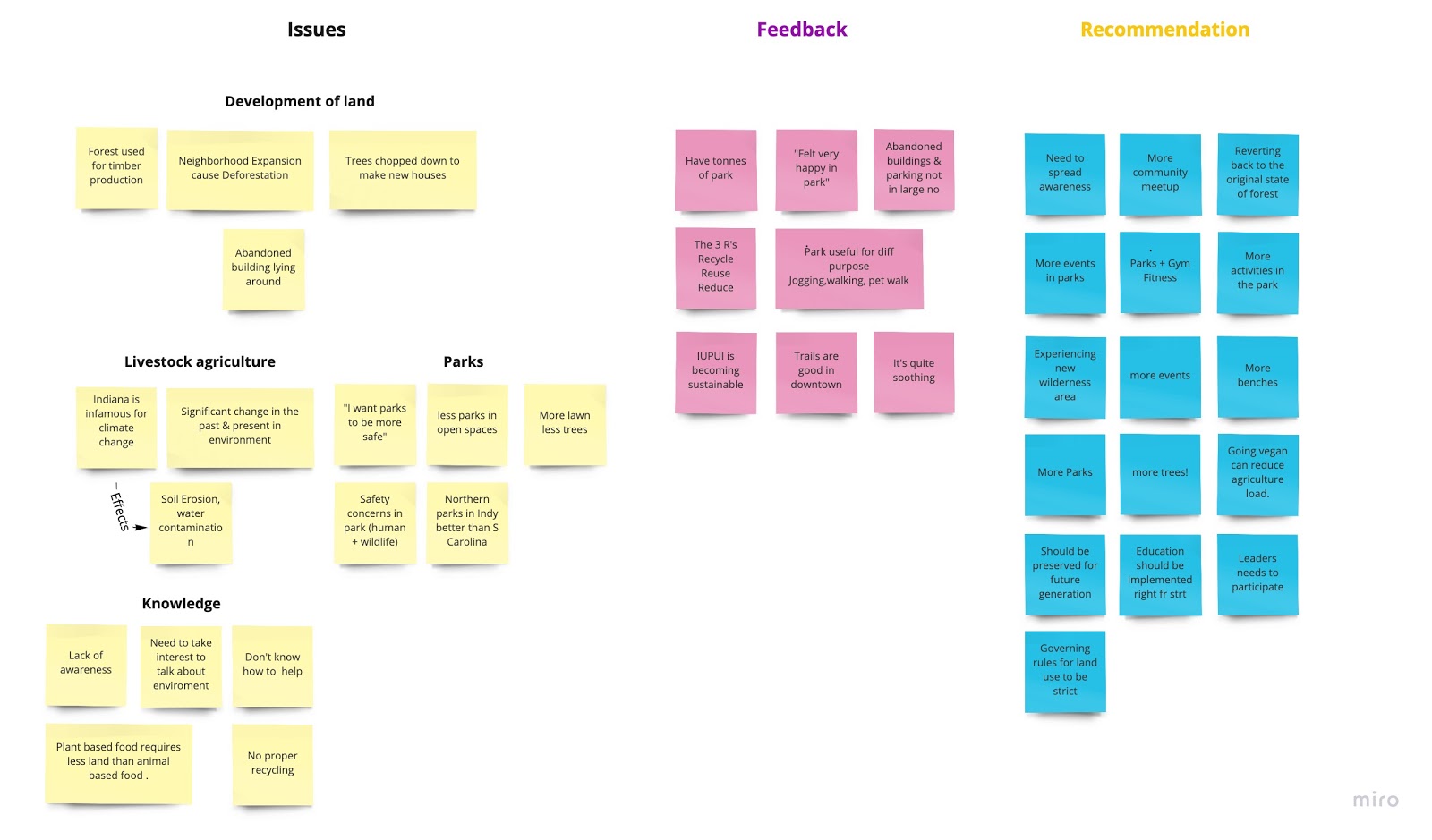
Awareness ≠ action
People know climate change is happening but don't know how it works or where they can personally help. The gap between concern and behavior was the central design challenge.
Students want parks, not lectures
Hoosiers want more parks and trees, and most participants were already interested in exploring nature. The design needed to meet them in the forest, not lecture them about climate change.
Tangible rewards drive behavior
College students respond to concrete incentives. Starbucks points redeemed through the Crimson Card used a system they already understood.
Technology as the credible bridge
Several participants saw technology as a bridge to action. AR could show where to plant and which tasks were available without requiring prior expertise.
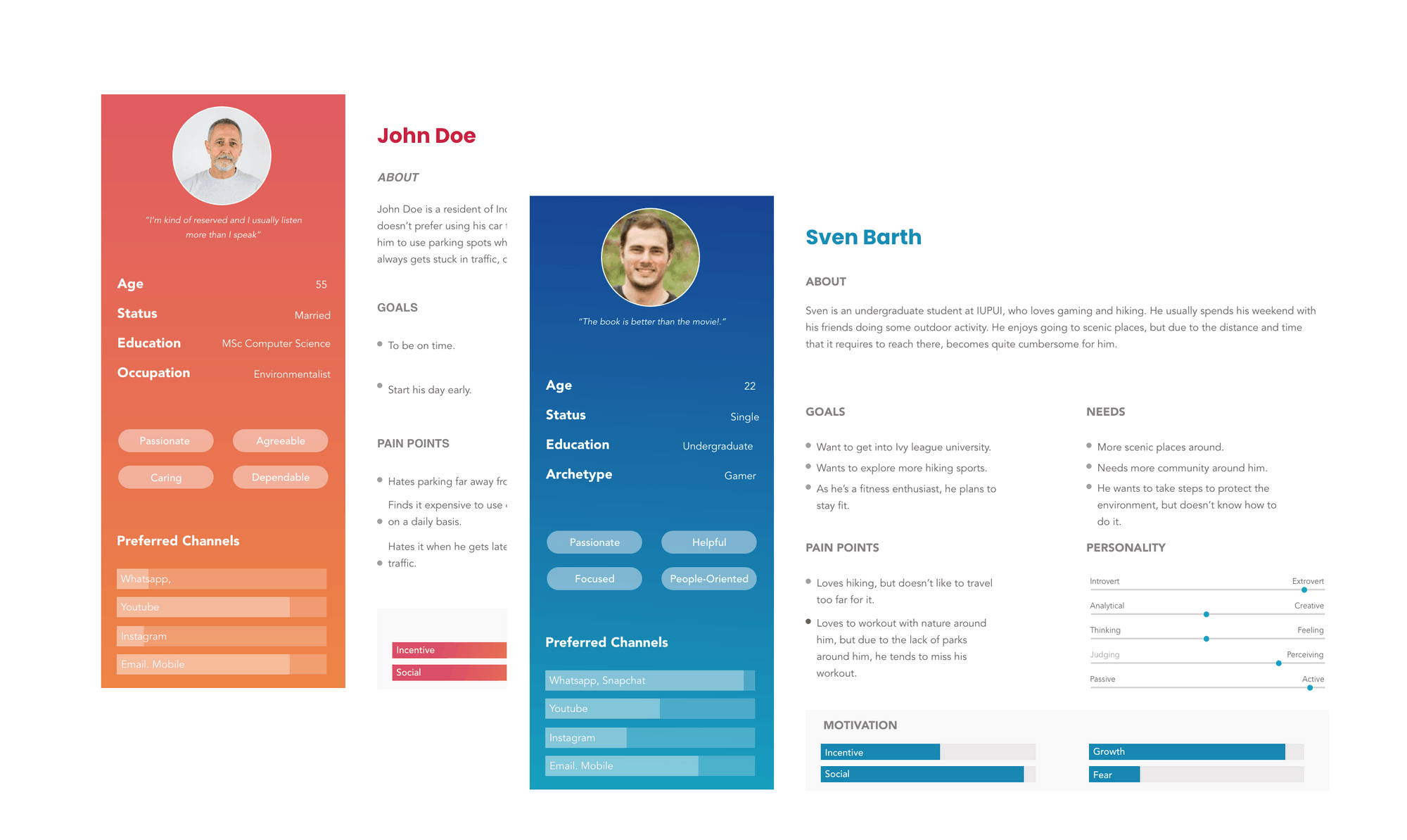
User personas
50 ideas, one that was technically, socially, and economically feasible
Research helped us reframe the problem. We explored 50 ideas, then picked Eco-Cash because it held up on technical, social, and economic feasibility.
How do we develop a collaborative application that will raise public consciousness about deforestation?
Three functional pillars

Motivate
Get users more involved through task-driven engagement tied to real places they can reach.

Gamify
Make conservation engaging through AR-guided tasks, points, progress, and social sharing.

Reward
Redeem points at Starbucks through the Crimson Card, giving students a tangible incentive.
Feasibility check
Technical: An established AR provider such as EcoTour could reduce build time by supplying infrastructure we would otherwise need to create.
Social: Cash-like points fit existing student behavior around deals and campus discounts.
Economic: A co-sponsorship model could let participating businesses fund rewards instead of the university or app.
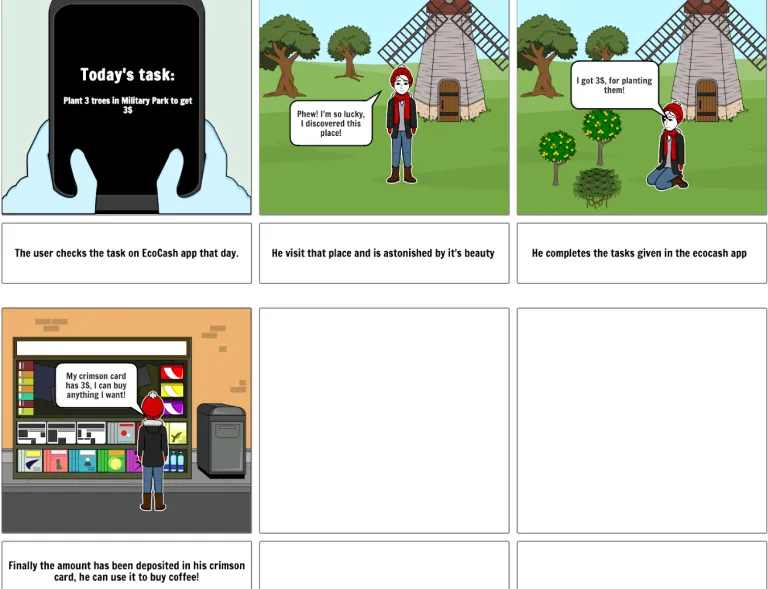
Storyboarding the experience
Three test-and-fix phases: paper, heuristics, hi-fi
Three phases: paper prototypes to establish the skeleton, heuristic evaluation to find and fix critical issues, then hi-fi screens implementing what we learned. Every problem found in testing was solved before the next phase began.
Pen and paper first
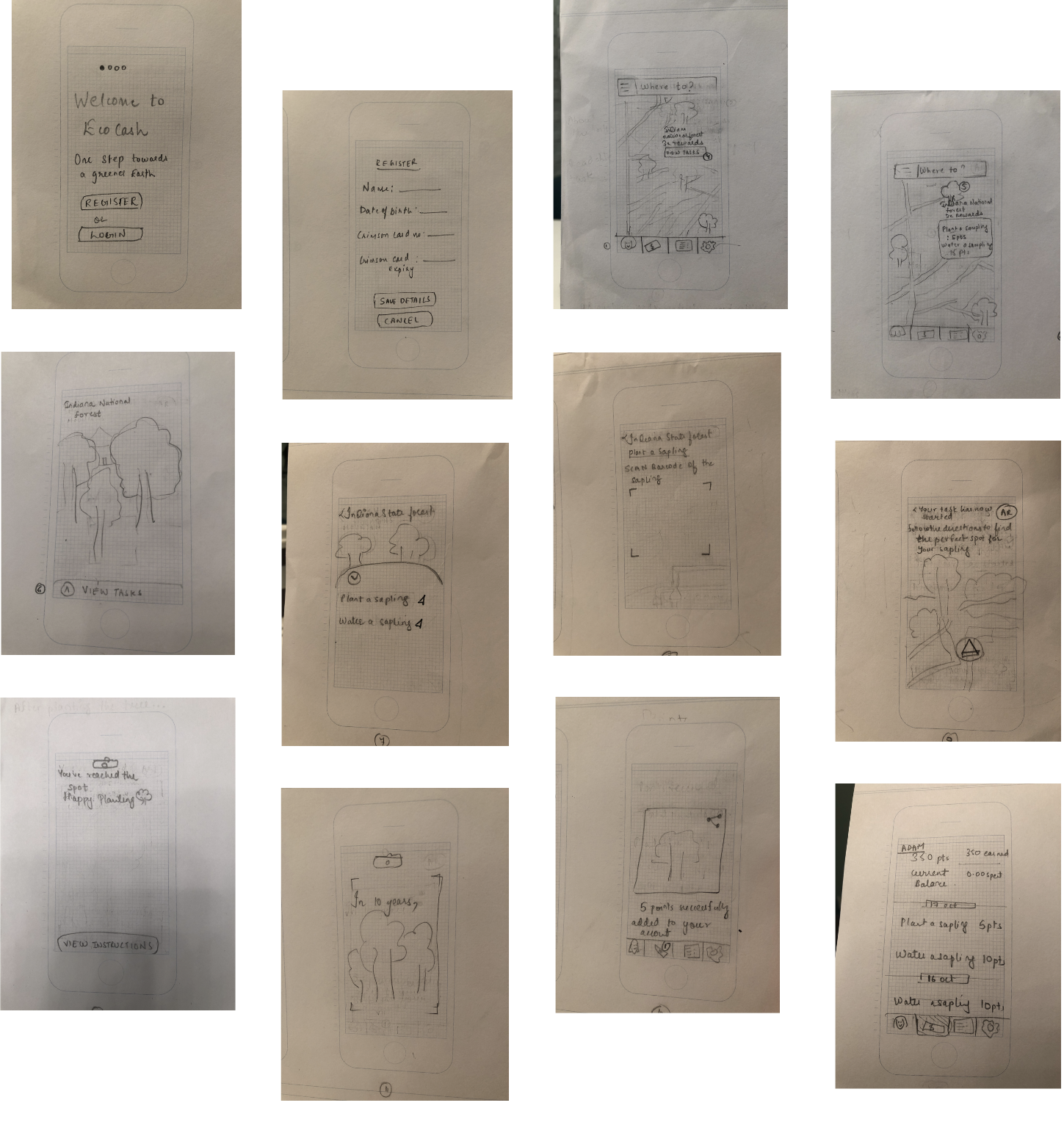
Three critical issues found and fixed
Applying Nielsen's 10 Usability Heuristic Principles plus a cognitive walkthrough (Spencer methodology) surfaced three issues that would have broken the experience. Each was resolved before hi-fi work began.
Three core flows
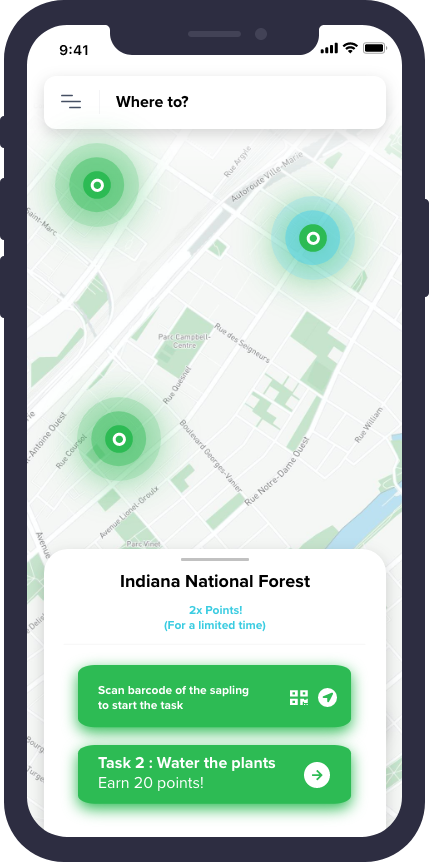
Forest availability
Browse available forest areas nearby, see task descriptions, difficulty, and estimated visit time before committing to a trip. The discovery surface had to be compelling enough to motivate the first visit.
Show distance, task count, and point value before students commit, so they can decide whether a trip is worthwhile.
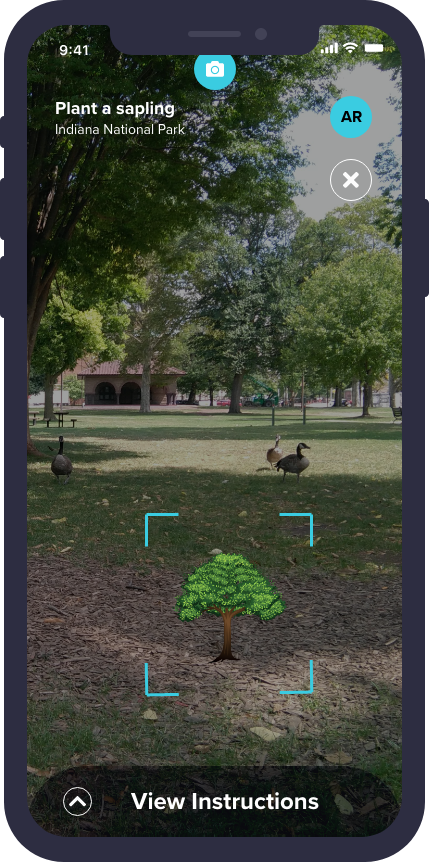
AR mode
In the forest, AR mode marks where students can plant saplings, photograph wildlife, or complete other conservation tasks. The guidance does not require prior expertise.
Rewards
Completed tasks earn points tracked in the app. The Rewards screen includes a Crimson Card barcode for redemption at Starbucks, addressing an issue found during heuristic testing.
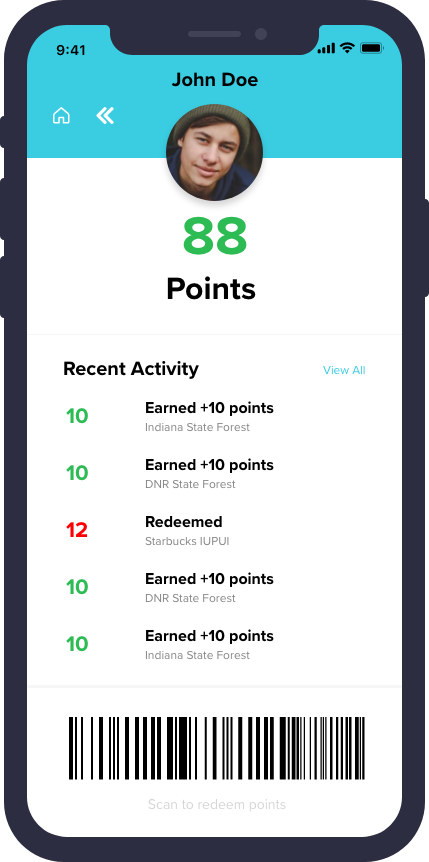
The entire reward flow had to work without the physical card. If redeeming was harder than showing the card, the digital loop would break. Convenience is what makes the habit stick.
Scaling through schools and conservation partners
Institutional partnerships
Collaborate with schools, universities, and conservation organizations to organize structured student trips and awareness campaigns at scale.
EcoTour integration
Formalize the AR partnership with EcoTour to expand technical capabilities and reach more forest areas without rebuilding the infrastructure from scratch.
Expanded forest network
Onboard more forest areas by coordinating with state authorities and conservation bodies, growing the task catalog and geographic reach across Indiana.
Eco-Cash was my first full design project under real constraints. We lacked direct access to part of our audience, relied on field research instead of lab sessions, and worked on a problem with no obvious technical answer. The project taught me to treat research, synthesis, ideation, testing, and iteration as working tools, not presentation steps.